How to Achieve the Best Set Up for Your Desk at Home or Work

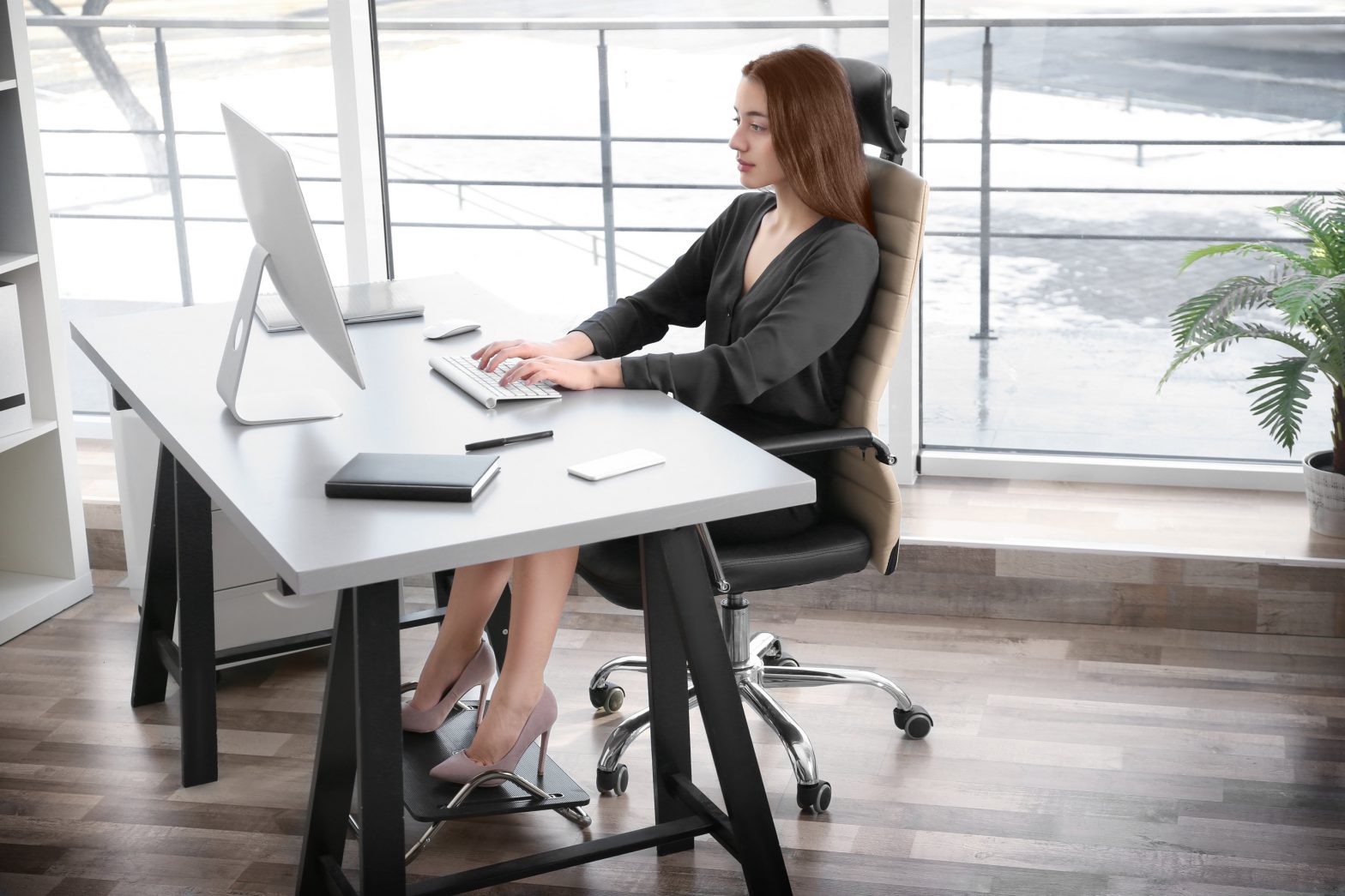
The first step of setting up your desk is using the information provided in our earlier blog post on setting up your chair. Only once your chair is set up should you turn your attention to your desk. The middle row of the keyboard should be level with the elbow (forearms parallel or slightly sloping downwards). An upward slope has the potential to cause problems with pressure points on the forearms or persistent shrugging of the shoulder girdle, leading to upper muscles of your neck becoming tense. Ideally, the desk should be motorised to allow constant changing between sitting and standing for better posture. Continue reading for further instructions on properly setting up your desk at home or work.

Desktop

The desktop should not be cluttered, allowing plenty of space for all of your necessary stationery and equipment.

Monitor

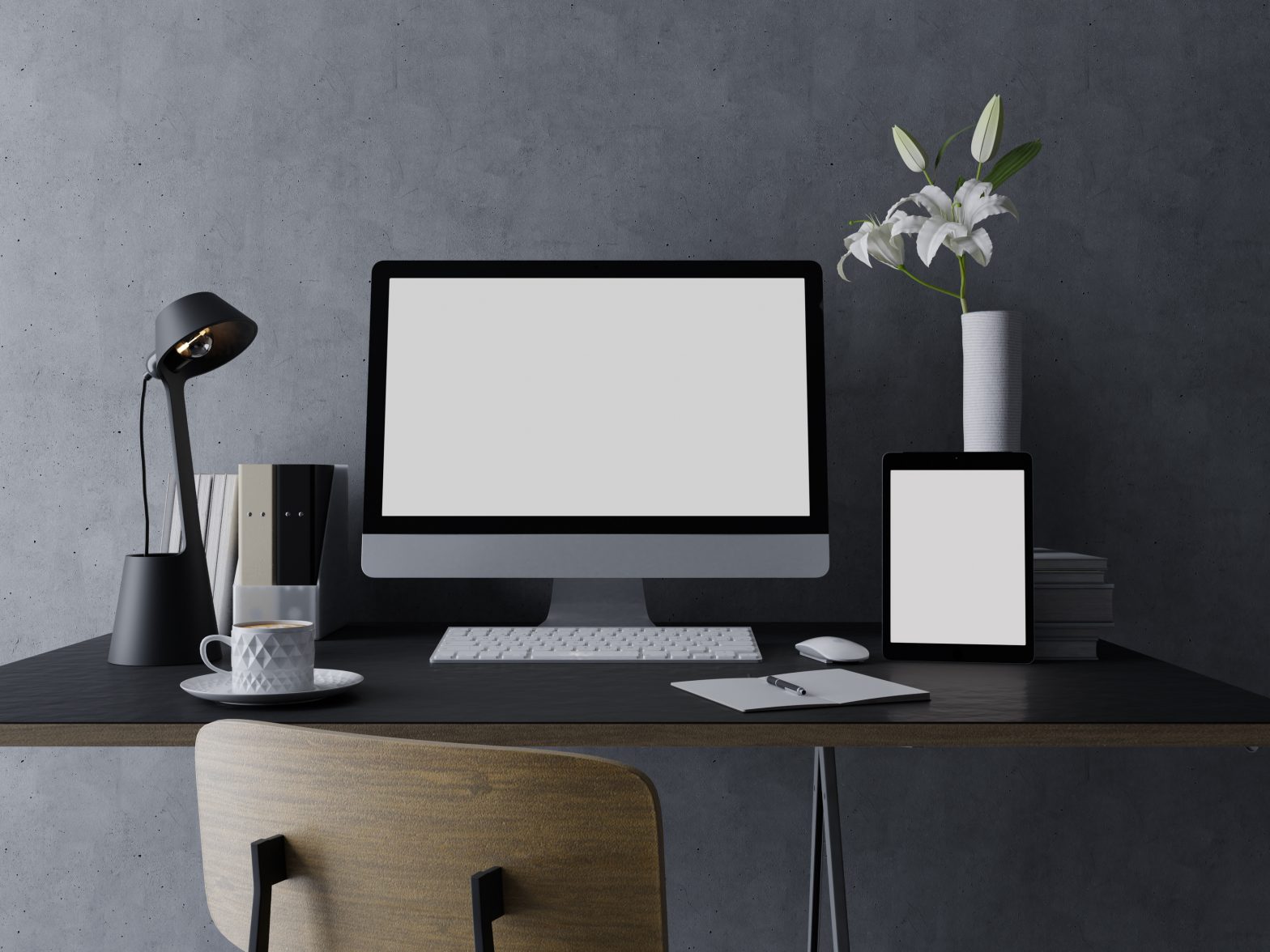
The recommended viewing distance is between 50 and 100cm. You should be able to read all the text easily with the head and trunk in an upright posture and the spine fully supported on the back of the chair. The top tool bar of the screen should be at eye level or below. The screen should be tilted so that it is perpendicular to the line of sight. If experiencing eye problems, or if you’re a non-touch typist, there may be justification for having the screen in a lower position. Position the screen at ninety degrees to any light source to avoid glare and reflections.

Document Holder

If working from printed text, a document holder is useful. This should be positioned in between the keyboard and the screen or as close as possible to the side of the screen. Different types are available according to whether paper documents or files need to be supported.

Keyboard and Mouse

Allow sufficient space in front of your keyboard to rest your hands when not typing. There should be no over reach on the keyboard or mouse. A standard keyboard is approximately 45cm wide with a numerical pad sticking out to the right which forces a right handed person’s arm further away from the body. A solution is to provide a shorter keyboard that’s 30cm wide without the numerical pad. If experiencing pain on the left or right side, it may be advisable to change the mouse over to the other arm and use the control keys to ‘share the load’, or vary your input devices. Many different input devices are available and it is very important to get the right one. You can find further information at www.abilitynet.org.uk.

Wrist Rests

Wrist or palm rests are not usually required and should only be used when resting the wrist and not when inputting data using the keyboard or mouse. Movement should be free flowing from the upper limbs and not isolated to the wrists. The hand should be in line with the forearm, and upwards or side bending movement of the wrist should be avoided.

Telephone

Cradling the telephone between the neck and shoulders can cause severe muscle tension. If you regularly use the telephone, consider a headset.

Additional Tips

Don’t Forget to Be Active

Enforced static posture is bad. With office related musculo-skeletal disorders on the increase, it is now widely appreciated that movement has to be introduced into the office scenario. It is often said that “the best posture to assume is the next one”.

Here are some ways to create movement in the office environment:

  • Take mini breaks regularly – at least hourly. Use this time to stand up, move around, change posture and maybe do some of the exercises detailed below.
  • Keep your mouse and telephone within easy reach and alternate between the left and right side, which may help alleviate tension in the neck and upper limbs.
  • If you have a free float or recline mechanism on your chair, use it to regularly change your position. This will have the effect of maintaining tone in the trunk muscles and improving circulation, breathing and alertness.
  • If you have an electronic height adjustable workstation, use the opportunity to sit, perch or stand whilst continuing with your office work. If you have a fixed height desk, try to stand up whenever possible. E.g. when you’re on the phone or talking to colleagues.
  • Regularly look away from your screen and focus on objects in the distance to try and prevent eye strain.
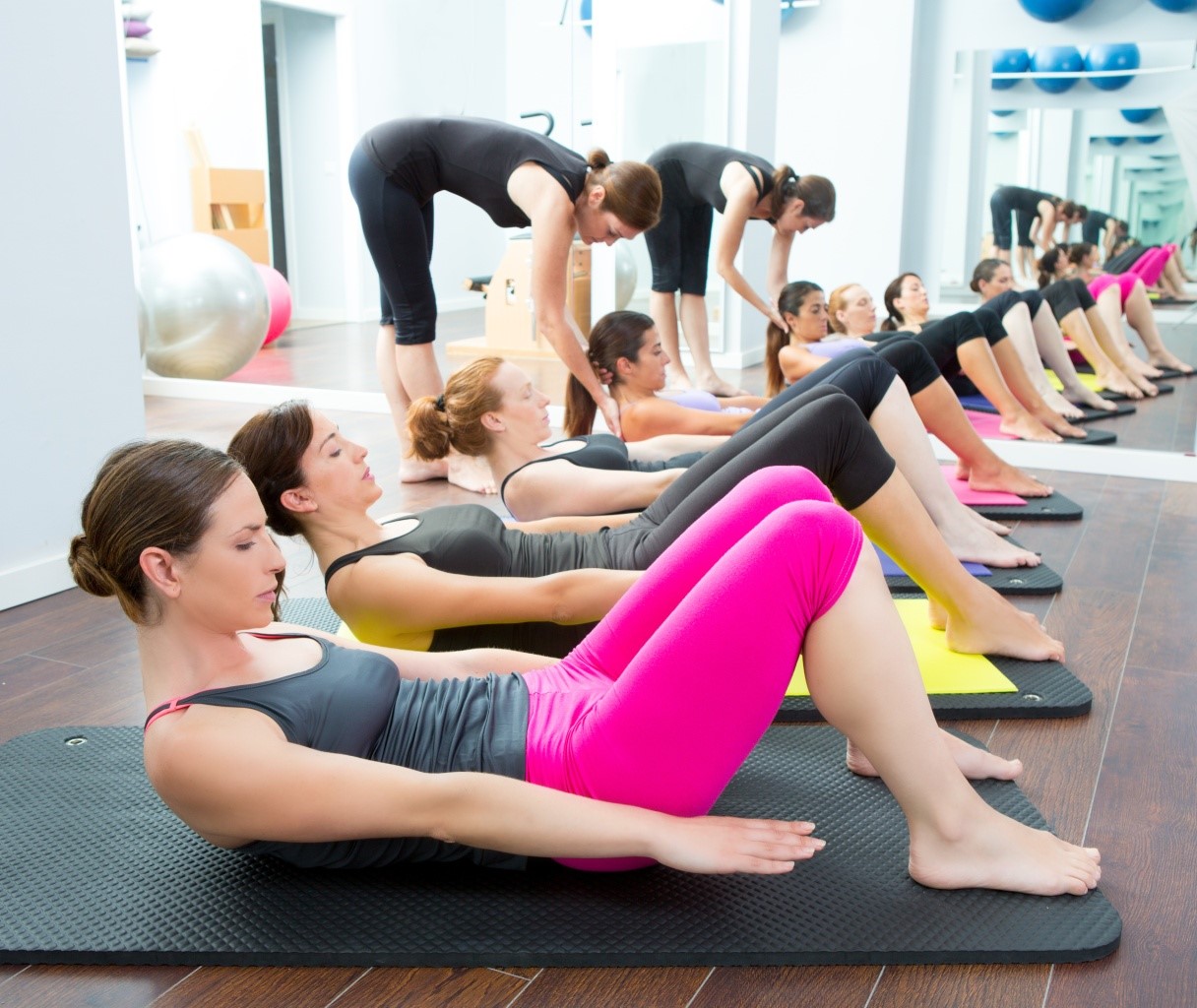
  • Be fit to work. Exercise regularly! Attend the gym or an exercise class such as Pilates and/or make the effort to walk or cycle to work. A conditioned body is much less likely to get aches and pains.

Participate in Deskercise

Try to do these exercises frequently throughout the day whilst sitting in your office chair. Doing a few exercises throughout the day will help to reduce the risk of computer related pain. All of these exercises should be done slowly and gently whilst sitting in a good upright posture. None of the exercises below should cause pain. For visual representation of these and additional exercises, visit: www.londoncityphysiotherapy.com.

  1. Chest Stretch – Put the heel of your hands into your lower back. Draw your elbows back and down. Keeping your head and neck steady with chin tucked in, lift your chest towards the ceiling. Take a deep breath, hold for 5 seconds and then relax.
  2. Trunk Side Stretch – Place one hand on the edge of the chair for support, and with the other hand, reach up to the ceiling and over the head and lean the trunk towards the supported hand. Hold for 5 seconds, then repeat on the other side.
  3. Posterior Shoulder Stretch – Grasp the elbow of one arm with your other hand and pull it across your chest to the opposite shoulder to stretch the back of the shoulder. Hold for 5 seconds, then repeat on the other side.
  4. Neck Mobiliser – Turn your head to the left and right, keeping your chin in and aiming your chin at your shoulders. Hold for 5 seconds on each side.
  5. Chin Tuck – Sitting tall, imagine you are suspended by a piece of string from the crown of your head. Keeping your eyes level with the horizon, tuck your chin in to make a double chin. Hold for 5 seconds, then repeat 3 times.
  6. Forwards Press – Gently interlock your fingers, palms facing away from you. Press your palms away from your body, gently stretching the forearm muscles, fingers and muscles between the shoulder blades. Hold for 5 seconds.
  7. Shoulder Shrug – Keep your shoulders back and lift them towards your ears, breathing in slowly. Tighten the muscles in your shoulders and hold for 5 seconds. Breathe out as you drop the shoulders. Repeat 3 times.
  8. Doorway Chest Stretch – Stand upright facing an open doorway in a stride position. Place your hands on the door frame so they are level with your shoulders. Lean your body through the doorway, leading with the chest and keeping your chin in. Hold for 5 seconds.

If you have a pre-existing musculo-skeletal disorder or medical condition, it may be advisable to discuss these exercises with a medical professional before starting. For more information, get in touch with Physio Melbourne Clinic.
How to Set Up Your Chair at Your Work Desk for Maximum Comfort & Ergonomics

Many workers don’t realise that how they set up their chair can have a big impact on their comfort and ergonomics. This blog post details some areas to pay attention to when setting up your chair at your work desk.

Seat Height

Adjust the height of your chair so that your hips are at level with or higher than your knees. The whole of your foot should be on the floor. Do not lower your chair to suit the desk height; instead, raise the desk. Ideally, the seat pan will have a rounded ‘waterfall’ padded edge to avoid placing pressure on the back of your knees.

Seat Depth

Adjust the seat depth to accommodate thigh length. With your back fully contacting the back rest, there should be a gap of about the width of your fist from the edge of the seat pan to your knee.

Arm Rests

Arm rests are not always necessary, and incorrect use can cause problems. If provided, arm rests should ideally be height, width and depth adjustable and should not prevent you from sitting close to your desk. When getting up from chair, try not to use the arm rests so you can challenge your technique of getting up.

Back Rest

The height of the lumbar curve will vary from person to person, so adjust the height of the back rest to accommodate your individual body shape. The back rest of the chair should allow a recline angle of at least 150.

Free Float and Movement Mechanisms

Chairs that can be set up to allow movement and variation in working posture are highly recommended by our physiotherapists. Workers should be properly trained in how to use all the adjustments on the chair and must be encouraged to use the adjustments to change positions frequently throughout the day.

For more tips on setting up your work chair for comfort and ergonomics, contact Physio Melbourne Clinic today.

Can Pilates Help You? Find Out More About Pilates & Its Benefits

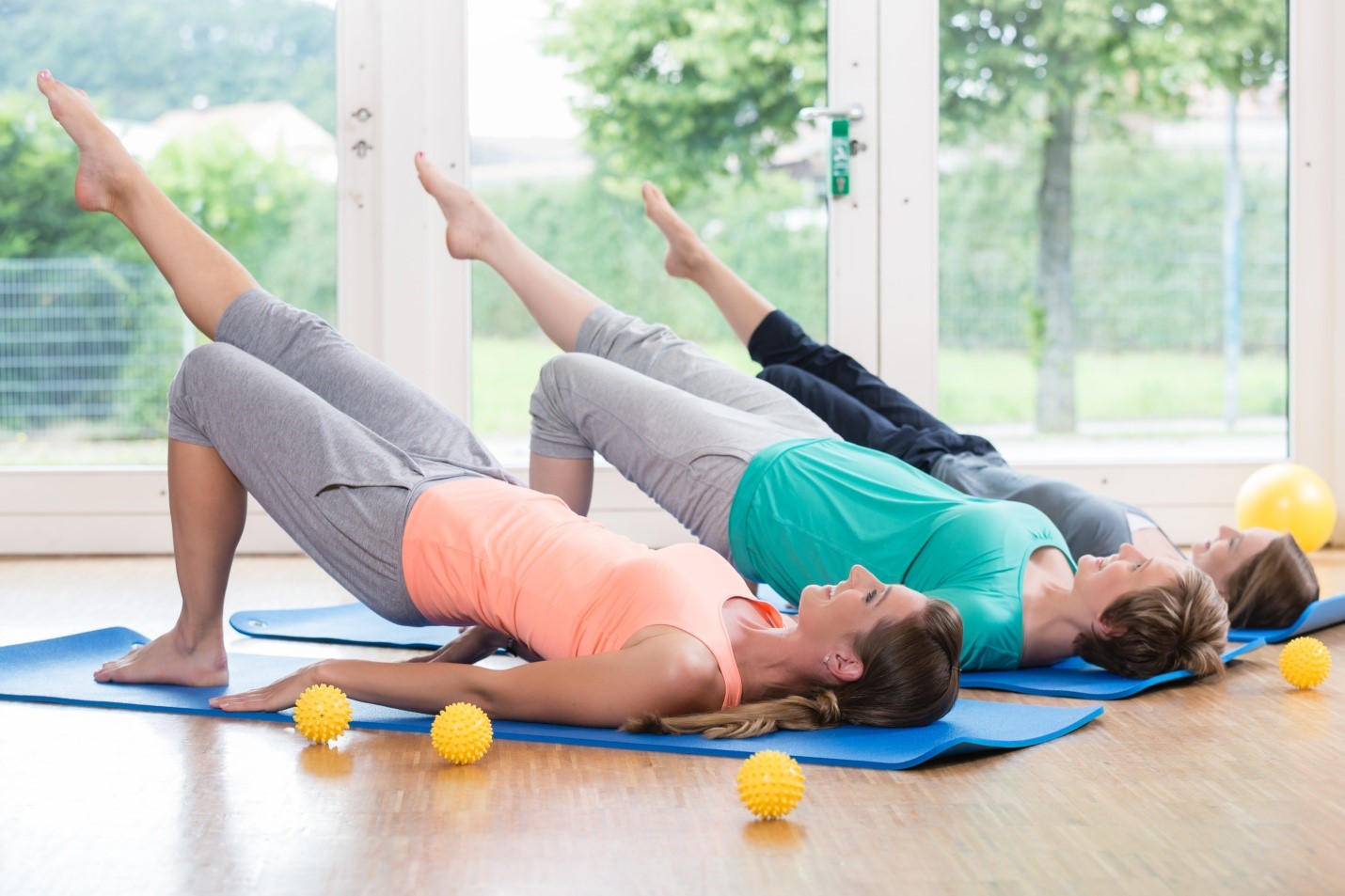
Pilates is a form of exercise that can have significant benefits for those suffering from injury or who simply want to maintain their fitness level. This blog post details what Pilates is and provides some information on how Pilates could benefit you.

What is Pilates?

In the 1920s, physical trainer Joseph Pilates introduced Pilates into America as a way to help injured athletes and dancers safely return to exercise and maintain their fitness. Since then, Pilates has been adapted to suit people in the general community.

Pilates can be an aerobic or non-aerobic form of exercise. It requires concentration and focus because you must move your body through precise ranges of motion and find a centre point to control your body. Each exercise has a prescribed placement, rhythm and breathing pattern.

The workout consists of a variety of exercise sequences that are performed in low repetitions, usually five to ten times, over a session of 45 to 90 minutes. Mat work and specialised equipment for resistance are used. Classes are held in specialised Pilates clinics, physiotherapy clinics, or at your local leisure facility or community centre. 

The Benefits

Here are some of the benefits Pilates offers over other forms of exercise:

  • Pilates lengthens and stretches all the major muscle groups in your body in a balanced fashion.
  • In Pilates, your muscles are never worked to exhaustion, so there is no sweating or straining, just intense concentration.
  • The Pilates method is taught to suit each person, and exercises are regularly re-evaluated to ensure they are appropriate for that person.
  • Due to the individual attention, Pilates can suit everybody from elite athletes to people with limited mobility, pregnant women and people with low fitness levels.

Book a Pilates Session Today

Pilates workouts at Physio Melbourne Clinic consist of moving through a slow, sustained series of exercises using abdominal control and proper breathing. The quality of each posture is more important than the number of repetitions or how energetically you can move. To book in for a Pilates session, contact our clinic today.

4 Easy Tips for Staying Active While in Lockdown

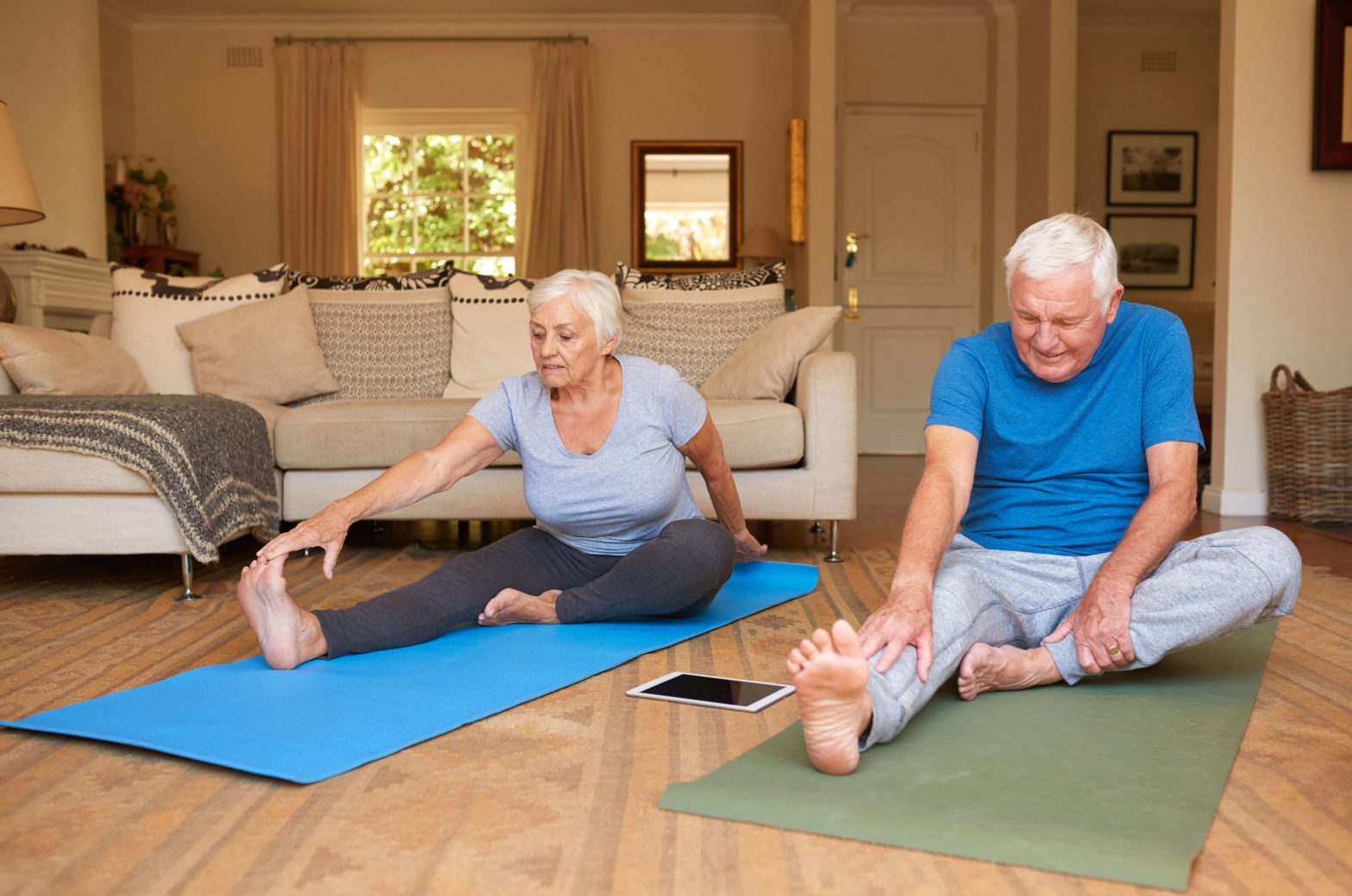
While you may not be able to stick to your normal daily routine – leaving the house, going shopping, meeting friends for coffee and doing your usual physical activities – you can create a new routine at home which includes alternative ways to keep active while in lockdown.

For example, you can try getting up at the same time every day, doing a workout first thing (more on this to come), taking a shower and making a nice breakfast, if that order appeals to you. There are loads of studies backing up the benefits of routine on positive mental health, and it’s something Mind UK recommends for “staying grounded”. Continue reading for further tips on staying active during lockdown.

Home Exercises as a Family

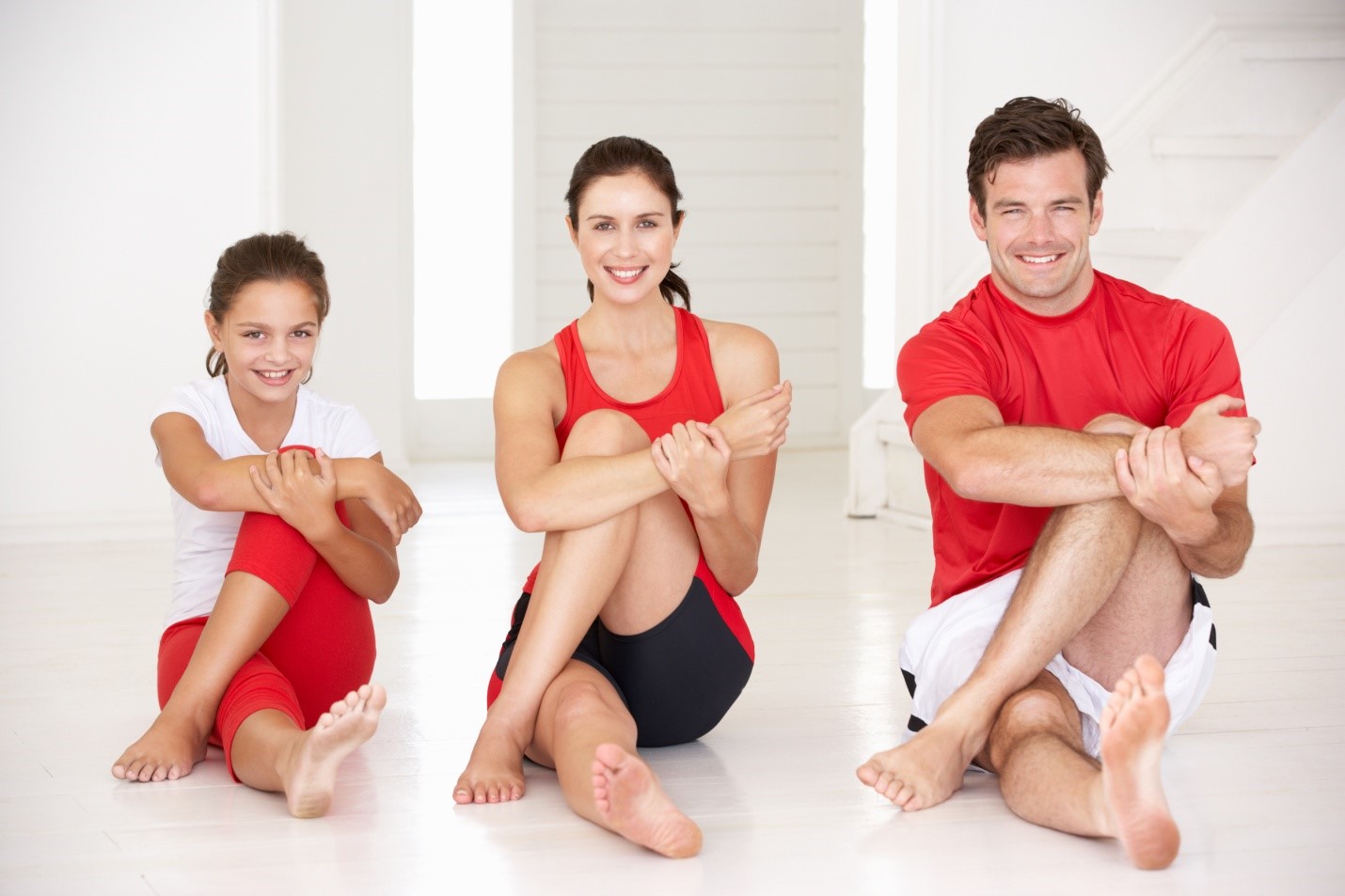
It’s a good idea to set aside time to do a home workout together. Joe Wicks, also known as The Body Coach, is doing a daily PE lesson live on YouTube at 9am designed for the whole family. These 30 minute at-home workouts will get everyone moving.

There are also lots of other family workouts on YouTube to explore – search for kids’ yoga, kids’ circuit training, kids’ cardio and kids’ workouts for inspiration. You’ll end up doing them along with your kids!

Home Exercise for Grownups

A family workout isn’t for everyone. It might work better for you and your partner if you make exercise your opportunity for a break from the children! You could go out for a walk or run, try a home yoga workout (Yoga with Adrienne offers a huge range of free videos), or do some bodyweight training.

Many online stores can also deliver exercise equipment within a few days of your order. If you know you’ll be missing the gym, this might be an option.

Get Outside for Fresh Air if You Can

Under the current lockdown rules, we’re still able to get outside for an hour every day for a walk or cycle. It’s well worth taking this opportunity – whatever the weather – to prevent cabin fever setting in.

Dance Off All Worries

When anxiety kicks in, how do you typically respond? Do you take a step back and breathe? Leave the room? Turn on some music and dance? According to some psychologists and therapists, dance therapy is one of the most effective responses.

Many therapists who treat anxiety are finding that dance has the potential to act as an effective treatment for anxiety. Do you know that some dance workouts are rated as high intensity interval training? The body has a deep influence on the mind, and vice-versa. Just like running a mile can distract you from the pressures of your to-do list, dance uses expressive movement and breathing to deflate hyper-aroused thoughts.

For more tips on staying active and healthy during lockdown, contact Physio Melbourne Clinic today.

Check Out Our Useful Resources & Links for Better Wellbeing

At Physio Melbourne Clinic, it’s our aim to help improve the wellbeing of our patients in different aspects of their lives. Below, we’ve listed some helpful resources and links to assist you in achieving better wellbeing across different areas.

Quality of Life

These qualities of Life assessment tools can be used to identify your current quality of life. Simply print off one of the assessments below and mark each statement on a scale of 1 to 5 to receive scores in areas such as compassion, burnout and secondary traumatic stress. 

Quality of Life assessment tools:

https://proqol.org/uploads/ProQOL_5_English.pdf

https://proqol.org/uploads/ProQOL_5_English_Self-Score.pdf

Pregnancy & Childbirth

For pregnant women, we recommend the Calm Birth childbirth education program to guide you through your pregnancy and childbirth.

Calm Birth:

https://calmbirth.com.au

Mental Health 

These days, mental health is more important than ever before. If you’re suffering from anxiety, depression or any other mental health issue, support is available through the links below.

Beyond Blue Heads Up program:

https://www.headsup.org.au/docs/default-source/resources/454574_0119_bl1909_acc.pdf

Anxiety & depression checklist:

https://www.beyondblue.org.au/the-facts/anxiety-and-depression-checklist-k10

Suicide prevention:

https://www.beyondblue.org.au/the-facts/suicide-prevention/worried-about-someone-suicidal

Mental health awareness for the workplace:

https://www.blackdoginstitute.org.au/education-services/health-professionals/

Women’s Safety

Violence against women is never the answer. ANROWS provides a number of resources to help women dealing with family violence.

Women’s safety program:

https://www.anrows.org.au

Health

The links below have trusted information on looking after your health. The Better Health website is a government resource with detailed information on a range of conditions and treatments, while the Quit website is an excellent resource for those looking to quit smoking and boost their health.

Better Health:

https://www.betterhealth.vic.gov.au/conditionsandtreatments

Quit smoking:

www.quit.org.au

Find Out More Today

For more information or support for matters relating to health and wellbeing, Physio Melbourne Clinic can point you in the right direction. Contact us today to find out more.

Back pain

What is back pain?


Irritation or damage to any area of the back muscles, structures or spine can cause back pain. It commonly occurs in the lower back. The spine consists of many bones called vertebrae, which are joined together. Each vertebrae has a bony joint called a facet joint and between each pair of vertebrae lies a disc, which acts as a cushion and provides shock absorption. Muscles and ligaments assist to provide stability to the spine What causes back pain? Back pain is usually caused by an injury to the back such as overstretching during lifting, bending or twisting. This may result in damage to muscles, ligaments or the discs. Back pain is common and affects most people at some time in their life.


Factors that can contribute to back pain include: • Bad work practices and lifting techniques • Poor posture • Being overweight • Lack of exercise • Pregnancy • Stress • Smoking.


If significant nerve damage is suspected, tests such as a CT scan or MRI might be ordered. Patients with severe injuries may need to see an orthopaedic surgeon or neurosurgeon for further treatment. This may include injections or, in extreme cases, surgery (an operation).


Most back pain tends to improve within a few days to a few weeks, and a therapist such as a physiotherapist, chiropractor or osteopath can assist with exercises, advice and treatment. Bulging discs and pinched nerves may take longer to heal. Few people require surgery.


Home care In the first two to three days you should aim to minimise pain and assist healing.


  • Wrap ice cubes in a damp tea towel, use frozen peas or a sports ice pack (never apply ice straight onto the skin) and apply to the back for 20 minutes, every one to two hours when awake.
  • Avoid ‘HARM” – Heat, Alcohol, Re-injury and Massage for the first few days as this will increase inflammation and swelling (even though it may feel good at the time.
  • Avoid activities you do not really need to do. Sit as little as possible until the pain settles. Avoid extended car travel unless absolutely necessary. Do not sit with your ‘feet up’. When sitting on an upright chair, push your bottom right back into the chair and ensure the hollow of your back is supported.
  • When resting, lie on your back, stomach, or on your side, supported by pillows.
  • Keep moving. Walk as much as you feel comfortable doing. Initially this may not be far and may require the use of crutches or a walking frame. Walk regularly and gradually increase the distances
  • Take painkillers when necessary. Do not expect medications to get rid of the pain completely. Most back pain improves with time. Do not let pain rule your life. Find other ways to do things that are causing you pain. How can I prevent back pain?
  • Stay active, control your weight, and keep a good posture at all times.
  • Do not smoke.
  • Do back exercises to keep your back flexible and strong.
  • Speak to a physiotherapist.
  • When lifting, use your legs and not your back. Hold objects as close to your body as possible and use both arms.
  • If working at a desk, make sure it is set up properly so you have a good posture – do not twist, do not look up or down at the computer screen. Notes: Follow up with: Seeking help Want to know more? Exercises These are likely to be helpful, but get advice if they do not help or aggravate the pain.
  • Lie face down – if easy, gradually prop up onto the elbows, as high as is comfortable.


Signs to Look out for:


  • Difficulty in passing urine
  • Loss of control of bowel & bladder
  • Pins & needles in arms or legs
  • Unable to stand & walk because of pain
  • Unsteadiness when you walk


Pillow Guidelines – which is correct pillow for me?

How do you choose which pillow is right for you?

Firm pillow?Soft pillow?or that Feather Pillow you get to see while doing your shopping trips?

Its always hard decision when it comes to good nights sleep and waking up without having that awkward neck pain?

According to research there are basically 4 types of pillows available in Market.

  • Cotton: The basic, bog-standard pillow. Cotton pillows are cheap and readily available – but they’re prone to absorbing heat, and over time they flatten out to nothingness. Fine for the spare room that is very rarely slept in; not good enough to be considered in my search for the best pillows out there. 
  • Feather: A more luxurious pillow that tends to be squashy and comfortable. Usually the feathers will be either duck or goose. If you can, buy a down pillow, which uses feathers from the softer, fluffier layer underneath a bird’s outer feathers; these tend to be even softer and more luxurious. Feather pillows are light and ultra-comfortable but they do tend to clump up requiring a daily plumping, and they’re obviously not vegan, if that matters to you. In addition, some people are allergic to duck or goose feather. 
  • Memory foam: Memory foam pillows were once all the rage but they’re on their way out now. Memory foam is designed to mould to the shape of your head, providing solid support all night long. They’re also hypo-allergenic and don’t require washing. The trouble is that they’re very firm, heavy, and absorb heat during the night, making for an uncomfortable combination. My advice is to only pick memory foam if you really want a firm, supportive pillow. 
  • Microfibre: The new kid on the block, microfibre aims to combine the best of all the other kinds of pillow. They’re soft and fluffy like feather, don’t clump, don’t trap perspiration or moisture, and aim to keep cool through the night. However, microfibre is also the most expensive pillow lining, so you generally tend to find these pillows are bulked out with memory foam or feathers 

If you still have niggling issues while sleeping or after your sleep -contact one of our qualified Physio @ 1300 34 14 09.

Running – How to improve your running skills?

Many people start running without preparing themselves & their body before running.

There are many things you can do to improve your running. Out of many we have shortlisted most important once for you here.

First thing you need to focus on is your overall strengthening . It is important to strengthen your leg muscles.

Exercise which is helpful for running is :

1)Lunges – You can do stationary on the spot Lunges or Walking lunges.

It helps you to strengthen your Gluteals,Hamstrings,Quadriceps,calf muscles & also your core muscles .

Lunges is your strength training exercise. You can not do repitative exercise of walking lunges everyday. Doing lunges every day can also make you fatigued and unable to use proper lunge form, causing undue stress to your lower back, knees and calves.

Before you begin any lunge variation, go through this pre-workout checklist:

  • Prepare your body for movement through mobilization and a proper warmup
  • Drive through your heel(s) to maximally recruit your glutes
  • Keep hips aligned to protect any knee deviation
  • Brace your core to create intra-abdominal pressure
  • Keep your head still throughout every exercise

If you’re a beginner, start with a simple static lunge or walking lunge, concentrating on the quality of each rep. Start with 3 sets of 10 reps for each leg.

2)Squats- Another common exercise which is really important is doing your squats.

Remember not to compromise your technique when doing squats.

It helps you to strengthen your Hamstrings,Quadriceps,Calf muscles & also teaches you great core control.

There are some basics of doing squats.

  • Stand with feet a little wider than hip width, toes facing front.
  • Bring your hips back—bending at the knees and ankles and pressing your knees slightly open—as you…
  • Sit into a squat position while still keeping your heels and toes on the ground, chest up and shoulders back.
  • Strive to eventually reach parallel, meaning knees are bent to a 90-degree angle.Remember not to pass your knee over your toes.
  • Press into your heels and straighten legs to return to a standing upright position.

  3) Interval Workout:

Before going for long run it is essential to check your body strength and train your body with Interval workout.

We have given here few examples of interval workout that you can follow before running practise.

Plan 1:Beginner workout (30 minutes)

Warm up- Easy jog or Walk – for 5 minutes,

Run- for 1 minute( Go for less incline & progress gradually)

Progress it to walk- for 3 minutes

Run- for 2 minute.Repeat it for 1 week with work/rest interval.

It is also important to control your breathing while you are running.

Plan 2: Intermediate to advanced Runner

  • Warm-up: 5 minute easy jog
  • Work interval: 5 minutes @ marathon pace (or 5 out of 10 on
  • Recovery time: 1 minute at easy pace
  • Work interval: 4 minutes @ half marathon pace (or 6 out of 10 PE)
  • Recovery time: 1 minute at easy pace
  • Work interval: 3 minutes @ 10K pace (7 out of 10 PE)
  • Recovery Time: 1 minute at easy pace
  • Work interval: 2 minutes @ 5K pace (8 out of 10 PE)
  • Recovery Time: 1 minute at easy pace
  • Work interval: 1 minute @ hard (sprint) pace (9 out of 10 PE)
  • Recovery Time: 1 minute at easy pace
  • Cool down: 5 minutes easy jogging

** Followed by your stretching routine.

** PE is – rate of perceived exertion.

*** after doing interval training it is important to check your fitness with Mile test & Beep test to check your strength before your running !!

Doing a timed mile on a track is also great way to assess your fitness and give yourself a goal to work toward. Run a hard mile (4 laps) at a fast but steady pace. You want to go as fast as you can, but maintain an even pace for each lap. For example, if you are aiming for a 6-minute mile, your goal would be to run each lap in 90 seconds.

Do not forget to keep breathing at your normal pace!! Running is also great way to improve your lungs vital capacity.

Arrange a Physio Consultation Today

Physio Melbourne Clinic is an excellent choice for physiotherapy in Melbourne. Contact us today to learn more about what we can do and how we can help. You can also request an accurate price estimate and book a physio consultation with one of our physiotherapists. Furthermore, feel free to check out our blog and FAQs for more information about our services and physiotherapy in general.

BOOK NOW